Peter Maxwell Davies: Piano Works 1949-2009
Richard Casey (piano)
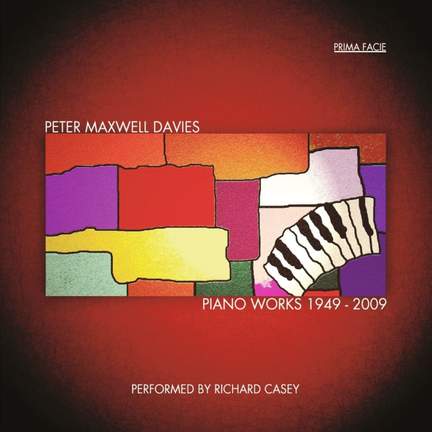
Casey — who interviews Davies on the last track — is consummately sensitive to his idioms, whether in children’s items or the densely avant-garde Five Pieces, Op 2, given a searching interpretation.
Peter Maxwell Davies: Piano Works 1949-2009
Richard Casey (piano)
Purchase product

Casey — who interviews Davies on the last track — is consummately sensitive to his idioms, whether in children’s items or the densely avant-garde Five Pieces, Op 2, given a searching interpretation.
About
Richard Casey performs virtually the entire solo piano repertoire of Peter Maxwell Davies, ranging over six decades, several of the compositions in world premiere recordings. The composer himself has described Richard Casey’s performances of this music as “magnificent”. The virtuosic Piano Sonata of 1981 is easily the most significant work, lasting some 30 minutes, while many of the short pieces were written for children.
The collection includes premiere recordings of pieces such as the early “Parade”, written as a 15-year-old, “Sub Tuam Protectioinem”, and “Ut Re Mi”, and many of the works are heard in definitive versions endorsed by Peter Maxwell Davies. The 2-CD set ends with a substantial discussion between Richard Casey and the composer.
One of the foremost composers of our time, Master of the Queen’s Music Sir Peter Maxwell Davies has made a significant contribution to musical history through his wide-ranging and prolific output. He lives in the Orkney Islands off the north coast of Scotland, where he writes most of his music. In a worklist that spans more than five decades, he has written across a broad range of styles, yet his music always communicates directly and powerfully, whether in his profoundly argued symphonic works, his music-theatre or witty light orchestral works.
Contents and tracklist
Awards and reviews
 11th August 2013
Casey — who interviews Davies on the last track — is consummately sensitive to his idioms, whether in children’s items or the densely avant-garde Five Pieces, Op 2, given a searching interpretation.