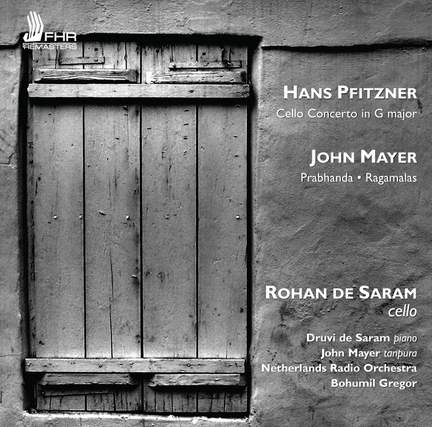
Pfitzner: Cello Concerto in G major
Rohan de Saram (cello), with Druvi de Saram (piano), with John Mayer (tanpura)
Netherlands Radio Orchestra, Bohumil Gregor
Rohan de Saram is on inspired form throughout, especially during the freer, quasi-improvised sections of the Ragamalas.
Pfitzner: Cello Concerto in G major
Rohan de Saram (cello), with Druvi de Saram (piano), with John Mayer (tanpura)
Netherlands Radio Orchestra, Bohumil Gregor
Purchase product

We pay more royalties to artists and composers than any other streaming service with our innovative Fair Play pay-per-second model
We pay artists and composers fairly with our pay-per-second model
Rohan de Saram is on inspired form throughout, especially during the freer, quasi-improvised sections of the Ragamalas.
About
“There are few of his [de Saram's] generation that have such gifts" (Pablo Casals)
With an abundance of irresistible qualities, the Cello Concerto is a work of high-water wonder and extraordinary richness and delight. There is Chopin-like quality to the music and the accompaniment in the orchestra often has a fluttering Delian like quality. Rohan de Saram studied with Casadó and Casals and was a member of the supreme ensemble the Arditti Quartet.
Contents and tracklist
- Rohan De Saram (cello), Druvi De Saram (piano)
- Rohan De Saram (cello), John Mayer (tanpura)
Awards and reviews
 July 2012
Rohan de Saram is on inspired form throughout, especially during the freer, quasi-improvised sections of the Ragamalas.