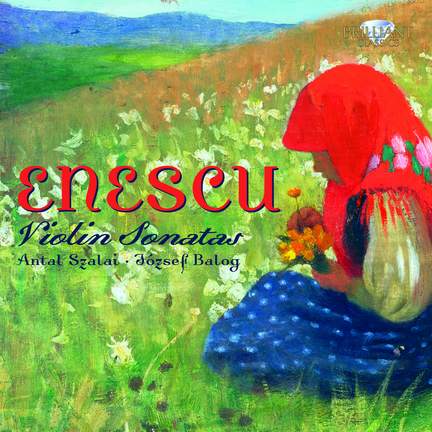
Special offer. Enescu: Violin Sonatas
Antal Szalai (violin), Jozsef Balog (piano)
Antal Szalai is especially good in the Second Sonata's finale, where the dawning folk element is underlined, though the Brahmsian axis of the rest also comes across well...He makes a credible...
Special offer. Enescu: Violin Sonatas
Antal Szalai (violin), Jozsef Balog (piano)
Purchase product

Antal Szalai is especially good in the Second Sonata's finale, where the dawning folk element is underlined, though the Brahmsian axis of the rest also comes across well...He makes a credible...
About
Pablo Casals called George Enescu (1881-1955) 'the greatest musical phenomenon since Mozart'. For many people he is remembered as one of the greatest violin virtuosos of the 20th century. Whilst true, that would be to recognise only one facet of this artist. He considered himself primarily a composer (he also was a fine pianist and conductor), and though his most famous work is the early Romanian Rhapsody No.1, this colourfully nationalistic effort is a world away from the individual and sophisticated style of his chamber and orchestra music. These show Enescu to be every bit the equal of his contemporaries Bartok, Kodaly, Janácek, Martinu and Szymanowski.
Like his contemporaries, he was very aware of the heritage of the traditional music of his country, and his style is a highly personal blend of folk music with the chromatic language of Wagner and Faure's sophistication and delicacy. Early in his career he played in orchestras conducted by Brahms, and studied in Paris with Massenet and Faure -- Ravel was a fellow pupil.
Contents and tracklist
- Antal Szalai (violin), Jozsef Balog (piano)
- Antal Szalai (violin), Jozsef Balog (piano)
- Antal Szalai (violin), Jozsef Balog (piano)
Awards and reviews
 May 2011
Antal Szalai is especially good in the Second Sonata's finale, where the dawning folk element is underlined, though the Brahmsian axis of the rest also comes across well...He makes a credible case for the early First Sonata too...the Third is given a clean, expertly balanced reading.
 March 2011
Szalai makes [much] of the first movement's pivoting between stasis and dynamism...listen to the uninhibited interplay between the two instruments in the fateful closing bars.