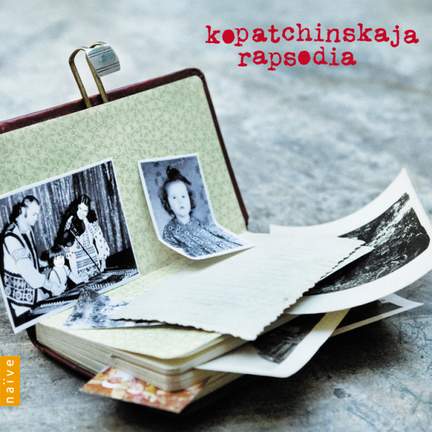
Kopatchinskaja: Rapsodia
Patricia Kopatchinskaja (violin), Emilia Kopatchinskaja (violin & viola), Viktor Kopatchinsky (cimbalom), Martin Gjakonovski (double bass) & Mihaela Ursuleasa (piano)
Awards:
-
BBC Music Magazine, December 2010, Chamber Choice

-
Gramophone Magazine, January 2011, Editor's Choice

[in the Enescu] both Kopatchinskaya and her partner Mihaela Ursuleasa [project] an instinctive feeling for the almost improvisatory musical line. Finally Ravel's Tzigane is presented not as...
Kopatchinskaja: Rapsodia
Patricia Kopatchinskaja (violin), Emilia Kopatchinskaja (violin & viola), Viktor Kopatchinsky (cimbalom), Martin Gjakonovski (double bass) & Mihaela Ursuleasa (piano)
Purchase product

Awards:
-
BBC Music Magazine, December 2010, Chamber Choice
-
Gramophone Magazine, January 2011, Editor's Choice
[in the Enescu] both Kopatchinskaya and her partner Mihaela Ursuleasa [project] an instinctive feeling for the almost improvisatory musical line. Finally Ravel's Tzigane is presented not as...
About
The exciting young Moldovan violinist Patricia Kopatchinskaya, who earlier this year won a BBC Music Magazine Award for her recording of Beethoven’s Violin Concerto, is here joined by a small group of musicians including her mother, also a violinist, and father, a renowned cimbalom player, in a selection of pieces that reflect Eastern European folk and Gypsy traditions. Amongst the composers represented are Enescu, Ligeti, Kurtág, and Ravel.
One of the few pieces to feature the cimbalom as a main instrument in the standard classical repertoire is György Kurtág’s 8 Duos for Violin and Cimbalom. Kurtág comes from a part of Hungary close to Romania, and his music in these short pieces is steeped in the folk tradition both countries. The Romanian composer George Enescu’s music is celebrated for its Gypsy rhythms and these elements come to the fore in his Third Violin Sonata.
Patricia Kopatchinskaya was born in Moldova and raised in a family of musicians. "Rapsodia" was the name of the former band of her father Victor Kopatchinsky, one of the most famous cimbalom players of his generation. Her parents were constantly travelling with their ensemble, playing 300 concerts every year - in the Kremlin for the government and the generals, in factories and prisons, and in Siberia, North Africa, and Latin America. With her father on the cimbalom, her mother playing a second violin and friends such as Mihaela Ursuleasa, she here performs works rooted in traditional Moldovan and Eastern European music alongside pieces such as Ravel’s Tzigane that have a Gypsy inspiration.
Contents and tracklist
- Patricia Kopatchinskaja, Emilia Kopatchinskaja, Viktor Kopatchinsky, Martin Gjakonovski, Mihaela Ursuleasa
- Patricia Kopatchinskaja, Emilia Kopatchinskaja, Viktor Kopatchinsky, Martin Gjakonovski, Mihaela Ursuleasa
- Patricia Kopatchinskaja, Emilia Kopatchinskaja, Viktor Kopatchinsky, Martin Gjakonovski, Mihaela Ursuleasa
- Patricia Kopatchinskaja, Emilia Kopatchinskaja
- Patricia Kopatchinskaja, Emilia Kopatchinskaja, Viktor Kopatchinsky, Martin Gjakonovski, Mihaela Ursuleasa
- Patricia Kopatchinskaja, Emilia Kopatchinskaja, Viktor Kopatchinsky, Martin Gjakonovski, Mihaela Ursuleasa
- Patricia Kopatchinskaja, Viktor Kopatchinsky
- Patricia Kopatchinskaja, Viktor Kopatchinsky, Mihaela Ursuleasa
- Patricia Kopatchinskaja, Emilia Kopatchinskaja, Viktor Kopatchinsky, Martin Gjakonovski, Mihaela Ursuleasa
- Patricia Kopatchinskaja, Emilia Kopatchinskaja, Viktor Kopatchinsky, Martin Gjakonovski, Mihaela Ursuleasa
- Patricia Kopatchinskaja, Emilia Kopatchinskaja, Viktor Kopatchinsky, Martin Gjakonovski, Mihaela Ursuleasa
Spotlight on this release
-
An error occurred.
Try watching this video on www.youtube.com, or enable JavaScript if it is disabled in your browser.
Awards and reviews
-
BBC Music MagazineDecember 2010Chamber Choice
-
Gramophone MagazineJanuary 2011Editor's Choice
 Christmas 2010
[in the Enescu] both Kopatchinskaya and her partner Mihaela Ursuleasa [project] an instinctive feeling for the almost improvisatory musical line. Finally Ravel's Tzigane is presented not as an empty virtuoso showpiece but as a work brimming with colour and imagination.
 January 2011
[Kopatchinskaja's] playing, and that of everyone else involved, leaves you in no doubt that refined sophistication and raw intensity can fuse, setting the music on fire...This well-recorded disc is a breath of the freshest musical air.
 March 2011
even before the first track is over, you realize this is a bit different…The greatest element of surprise comes in the form of Ravel's Tzigane...The resulting performance has an authenticity to Hungarian folk music Ravel could hardly have imagined...Kopatchinskaja's boldness and spirit of adventure should appeal to like-minded listeners.
The Independent on Sunday 12th December 2010
The daughter of a cimbalom virtuoso and a classically trained violinist, she is equally at home in both worlds. Enescu's Sonata No 3 is framed by dances and extrapolations by Ligeti and Kurtag. Ravel's touristic "Tzigane" is transformed, while Jorge Sanchez-Chiong's "Crin" sees Kopatchinskaja vocalise Dada-esque syllables to kinetic pizzicato. Spicy and surprising.