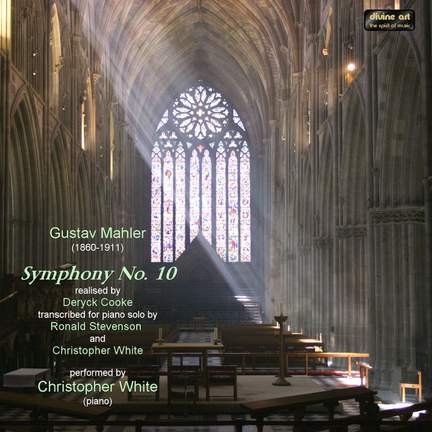
Mahler: Symphony No. 10 in F sharp major
Christopher White (piano)
this version for solo piano is, in a sense, as authoritative as any other presentation; and engrossing it is, played with fervour and intelligence, lent an unmistakable symphonic atmosphere...
Mahler: Symphony No. 10 in F sharp major
Christopher White (piano)
Purchase product

We pay more royalties to artists and composers than any other streaming service with our innovative Fair Play pay-per-second model
We pay artists and composers fairly with our pay-per-second model
this version for solo piano is, in a sense, as authoritative as any other presentation; and engrossing it is, played with fervour and intelligence, lent an unmistakable symphonic atmosphere...
About
This fascinating disc introduces the listener to a completely new experience - that of Mahler’s 10th Symphony, transcribed for solo piano. Whilst not slavishly attempting to reproduce every orchestral sound on the piano, there are quasi-orchestral effects in places, but it should be regarded as a piano piece - or perhaps more appropriately a ‘piano commentary’ on the performing draft of the uncompleted 10th Symphony.
Contents and tracklist
Mahler:
I. Adagio: Andante - Adagio (Arr. D. Cook, R. Stevenson and C. White for piano)
Work length20:59
This work is only available as an album download.
- Christopher White
Mahler:
II. Scherzo. Schnelle Viertel (Arr. D. Cook, R. Stevenson and C. White for piano)
Work length11:48
- Christopher White
Mahler:
III. Purgatorio: Allegretto moderato (Arr. D. Cook, R. Stevenson and C. White for piano)
Work length4:27
- Christopher White
Mahler:
IV. Scherzo. Allegro pesante, nicht zu schnell (Arr. D. Cook, R. Stevenson and C. White for piano)
Work length11:15
- Christopher White
Mahler:
V. Finale. Langsam - Allegro moderato - Adagio (Arr. D. Cook, R. Stevenson and C. White for piano)
Work length18:33
- Christopher White
Awards and reviews
 14th March 2010
this version for solo piano is, in a sense, as authoritative as any other presentation; and engrossing it is, played with fervour and intelligence, lent an unmistakable symphonic atmosphere and drama...The whole account bristles with intellectual life.
 25th March 2010
with no orchestral clothing to cushion its dissonances, the music seems more anguished, more modernist, especially in the monumental first movement.