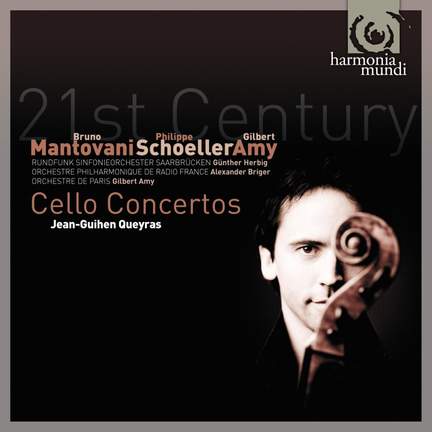
Special offer. 21st Century Cello Concertos
Jean Guihen Queyras (cello)
Rundfunk Sinfonieorchester Saarbrücken, Orchestre Philharmonique de Radio France, Orchestre de Paris, Günther Herbig, Alexander Briger, Gilbert Amy
In all three pieces, Queyras is wonderfully committed.
Special offer. 21st Century Cello Concertos
Jean Guihen Queyras (cello)
Rundfunk Sinfonieorchester Saarbrücken, Orchestre Philharmonique de Radio France, Orchestre de Paris, Günther Herbig, Alexander Briger, Gilbert Amy
Purchase product

In all three pieces, Queyras is wonderfully committed.
About
Three composers, three masterworks of our time, performed by three orchestras - and a central figure, the moving spirit behind this fine project devoted to the concertante cello: Jean-Guihen Queyras, voted Artist of the Year 2008 in Diapason.Three sometimes very different, yet at the same time highly complementary ways of conceiving the concerto in the 21st century. Long a soloist with the Ensemble Intercontemporain, Jean-Guihen Queyras was profoundly influenced by working with Pierre Boulez. His discography, distinguished by a musical eclecticism, includes works by Haydn (on period instruments) as well as Dvorák and 20th-century composers.
Contents and tracklist
- Orchestre Philharmonique de Radio France, Jean-Guihen Queyras, Alexandre Briger
- Orchestre de Paris, Jean-Guihen Queyras, Gilbert Amy
Awards and reviews
 29th May 2009
In all three pieces, Queyras is wonderfully committed.
 22nd May 2009
Amy's "Concerto pour violoncelle et orchestre" opens with bold, broad solo strokes, and builds to a more animated conclusion in which Queyras's cello deftly rides a passage of marimba and percussion.
 1st June 2009
While inhabiting diverse worlds of sound, these three cello concertos share a common thread in the refined, comprehensive artistry of Jean-Guihen Queyras. The Canadian-born Frenchman has come to the fore as a versatile cellist, persuasive in the Classical and Romantic repertoire as much as in the modern milieu he experienced as a member of the Ensemble Intercontemporain. Whether in the emphatic drama of Bruno Mantovani’s Concerto of 2003, the more rarefied atmosphere of Philippe Schoeller’s The Eyes of the Wind (premiered in 2005) or the multifaceted athletics of Gilbert Amy’s Concerto (which was completed in 2000), Queyras draws out the character and colour of each piece in the most compelling way.