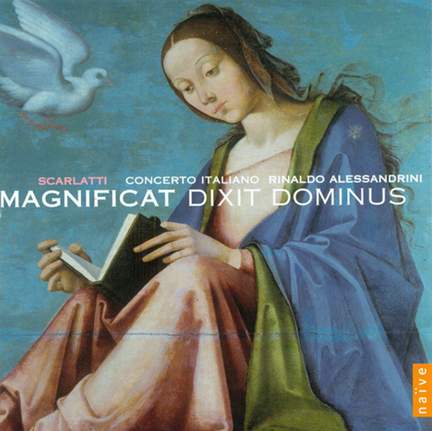
Scarlatti, A: Magnificat, etc.
Anna Simboli (soprano), Elisabeta Tiso (soprano), Paolo Costa (alto), Gianluca Ferrarini (tenor) & Sergio Foresti (bass)
Concerto Italiano, Rinaldo Alessadrini
But most startling are the madrigals, recalling Monterverdi before he re-defined the genre in his Book V, and spiced by Gesualdo's harmonic quirks, Scarlatti leaps at every opportunity to write...
Scarlatti, A: Magnificat, etc.
Anna Simboli (soprano), Elisabeta Tiso (soprano), Paolo Costa (alto), Gianluca Ferrarini (tenor) & Sergio Foresti (bass)
Concerto Italiano, Rinaldo Alessadrini
Purchase product

We pay more royalties to artists and composers than any other streaming service with our innovative Fair Play pay-per-second model
We pay artists and composers fairly with our pay-per-second model
But most startling are the madrigals, recalling Monterverdi before he re-defined the genre in his Book V, and spiced by Gesualdo's harmonic quirks, Scarlatti leaps at every opportunity to write...
About
Contents and tracklist
Awards and reviews
 Proms 2007
But most startling are the madrigals, recalling Monterverdi before he re-defined the genre in his Book V, and spiced by Gesualdo's harmonic quirks, Scarlatti leaps at every opportunity to write descriptively - 'flame', 'laugh', 'ice', 'ashes' all invite vivid word-painting. The recording is occasionally overly close and assertive in a dry studio acoustic. Listening at a lower volume level than normal helped - and at their quietest, the ensemble is pure magic.
 2010
2010
For this setting of Dixit Dominus Alessandro Scarlatti harked back to the early 17th century (if not earlier) with some wilfully old-fashioned stile antico. Likewise, the Magnificat featured here is an exquisite polyphonic composition: it opens with long sustained contrapuntal lines, and closes with a flowing 'Amen'. All of the music featured here is simply scored for voices and continuo; choral passages are superbly sung by Concerto Italiano's five singers, and some intimate passages for solo voice accompanied only by theorbo ('Quia respexit humilitatem') require excellent coloratura. Scarlatti's genius as a word-painter and composer for voices is obvious in five superb madrigals.
The two sopranos are infrequently guilty of loose intonation but on the whole Concerto Italiano perform with a commendable juxtaposition of colour and restraint. The close-knit ensemble finely judges sweetly balanced suspensions during Sdegno la fiamma estinse. The glorious harmonic unfurling during the opening bars of O morte, agli altri fosca, a me serena is worth the price of the disc alone.
 September 2007
All of the music featured here is simply scored for voices and continuo; choral passages are superbly sung by Concerto Italiano's give singers, and some intimate passages for solo voice accompanied only by theorbo ("Quia respexit humilitatem") require excellent coloratura. Scarlatti's genius as a word-painter and composer for voices is obvious in five superb madrigals.