Special offer. Piazzolla - Orchestral Works Volume 2
Württembergische Philharmonie Reutlingen, Gabriel Castagna
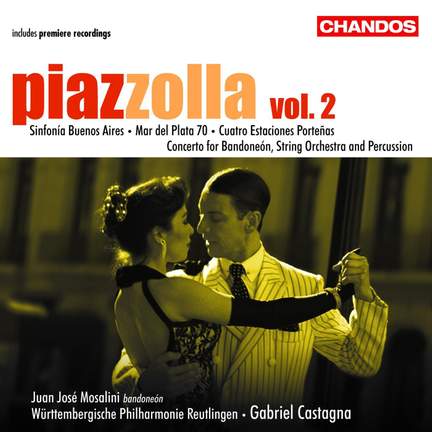
Gabriel Castagna gives us the first recording of the Sinfonía Buenos Aires. Composed in 1951, it is far more ambitious in scope than the Sinfonietta – and more daring, as well. The music's tightly...
Special offer. Piazzolla - Orchestral Works Volume 2
Württembergische Philharmonie Reutlingen, Gabriel Castagna
Purchase product

We pay more royalties to artists and composers than any other streaming service with our innovative Fair Play pay-per-second model
We pay artists and composers fairly with our pay-per-second model
Gabriel Castagna gives us the first recording of the Sinfonía Buenos Aires. Composed in 1951, it is far more ambitious in scope than the Sinfonietta – and more daring, as well. The music's tightly...
About
Contents and tracklist
- Gabriel Castagna, Wurttemberg Philharmonic Orchestra
- Gabriel Castagna, Wurttemberg Philharmonic Orchestra, Juan José Mosalini
- Gabriel Castagna, Wurttemberg Philharmonic Orchestra
- Gabriel Castagna, Wurttemberg Philharmonic Orchestra
Awards and reviews
 2010
2010
Gabriel Castagna gives us the first recording of the Sinfonía Buenos Aires. Composed in 1951, it is far more ambitious in scope than the Sinfonietta – and more daring, as well. The music's tightly coiled rhythms are typical of the composer, certainly, but there's an edgy grandeur and harmonic pungency here that's like nothing else in his output.
Indeed, with its onslaught of percussion and blazing brass, the wailing climax of the slow movement put me in mind of Shostakovich's Eighth Symphony. Castagna inspires some ferocious playing from his German orchestra, particularly in the frenetic and feral finale.
The Concerto for bandoneón, strings and percussion (1979) is played with verve, too. Juan José Mosalini puts a jaunty spring in the rhythms of the solo part, a delectable reminder of the score's dance-music roots. José Carli's fullorchestra arrangement of Mar del Plata 70 retains the tango's acerbic character. Less appealing is Carlos Franzetti's transcription of Cuatro estaciones porteñas: Franzetti is a marvellous composer himself, and this suite is expertly scored, but the results are overly lush.
 August 2007
…Castagna gives us the first recording of the Sinfonia Buenos Aires. Composed in 1951, it is far more ambitious in scope than the Sinfonietta - and more daring, as well. Castagna inspires some ferocious playing from his German orchestra, particularly in the frenetic and feral finale. The Concerto for bandoneón, strings and percussion (1979) is played with verve, too. Juan José Mosalini puts a jaunty spring in the rhythms of the solo part, a delectable reminder of the score's dance-music roots.