20th century classical music for piano
Steven Neugarten (piano)
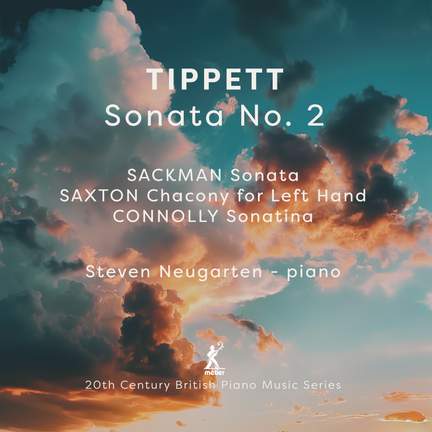
First class. I take it that this series will eventually couple all of Tippett’s piano sonatas with other, mostly more recent British piano music. On the basis of these two volumes it does a...
20th century classical music for piano
Steven Neugarten (piano)
Purchase product

We pay more royalties to artists and composers than any other streaming service with our innovative Fair Play pay-per-second model
We pay artists and composers fairly with our pay-per-second model
First class. I take it that this series will eventually couple all of Tippett’s piano sonatas with other, mostly more recent British piano music. On the basis of these two volumes it does a...
About
Contents and tracklist
- Steven Neugarten (piano)
- Steven Neugarten (piano)
- Steven Neugarten (piano)
Awards and reviews

First class. I take it that this series will eventually couple all of Tippett’s piano sonatas with other, mostly more recent British piano music. On the basis of these two volumes it does a lot more than merely couple. There are audible debts here, acknowledged by Robert Saxton in an affectionate tribute to Sir Michael printed among the other notes, but also clearly perceptible in Nicholas Sackman’s fine Sonata. Placing the Tippett sonatas in these contexts, to which they stand up very well, also points up what a very distinguished cycle they are. Not least, each disc is an admirable visiting card for a young pianist of real interpretative gifts.
Unwin is the more immediately striking of the two, perhaps because he has the challenge and the attendant rewards of Tippett’s Fourth Sonata: the characteristic sonorities, the spare lyricism and the formal ingenuities are spot on, and by the time I reached the apotheosis of Tippettian lyricism and the sonata’s beautiful coda I was convinced that I have not heard this work better done. Saxton’s one-movement Sonata, seemingly much freer than the Tippett but in fact controlled through all its splendid pianistic gestures by a firm and quite perceptible thematic discipline, is also very perceptively played, and Unwin enjoys himself hugely in Colin Matthews’s boldly virtuoso Studies. The brief and ambiguous Constant Lambert Elegy, darkly vehement but bleak, is no less shrewdly characterized: a distinguished debut recording.
But I should not underestimate Steven Neugarten. Although in Tippett’s Second Sonata I find a slight lack of that heady, ecstatic lyricism to which this grand and on the whole percussive sonata occasionally turns, I was impressed by the power and the attack of his playing, and am extremely grateful for such a sympathetic reading of Justin Connolly’s misleadingly numbered Op. 1 (it was written in 1962 but revised and expanded in 1983). This is a gripping piece, vividly visual and dramatic within its spare, angular style; Connolly is a composer of genuine importance who has been disgracefully neglected by the recording industry. Saxton’s Chacony is a curious but attractive “fantasy on a scale”, giving Neugarten plenty of room for agreeable pianistic rhetoric. Sackman’s Sonata, with a long cantabile at its centre radiating stillness and lyricism into the more mechanistic and virtuoso outer movements, also amply deserves a recording, and a performance as compelling as this one. Like Unwin’s recital it is excellently recorded, cleanly but not clinically.