Special offer. Schütz: Symphoniae Sacrae III
Concerto Palatino & Cantus Cölln, Konrad Junghänel
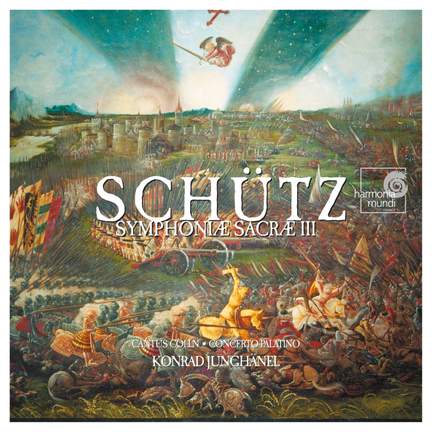
Awards:
-
BBC Music Magazine, December 2005, Choral & Song Choice

-
Gramophone Magazine, January 2006, Editor's Choice

-
Building A Library, December 2021, Recommended Recording

Junghänel's initiative is all the more welcome for presenting a superbly polished performance while maintaining an equilibrium between the energy and colour of Schütz's Italian models and the...
Special offer. Schütz: Symphoniae Sacrae III
Concerto Palatino & Cantus Cölln, Konrad Junghänel
Purchase product

We pay more royalties to artists and composers than any other streaming service with our innovative Fair Play pay-per-second model
We pay artists and composers fairly with our pay-per-second model
Awards:
-
BBC Music Magazine, December 2005, Choral & Song Choice
-
Gramophone Magazine, January 2006, Editor's Choice
-
Building A Library, December 2021, Recommended Recording
Junghänel's initiative is all the more welcome for presenting a superbly polished performance while maintaining an equilibrium between the energy and colour of Schütz's Italian models and the...
About
It was late in 1650 that Schütz published the third and last part of his Symphoniæ sacræ, a true hymn to peace in the aftermath of the Thirty Years War. A polychoral ensemble on this scale had not been heard since the Psalms of David (1619), already recorded by Cantus Cölln. The way this work combines tradition and renewal compels admiration: yes, these ‘sacred symphonies’ really did lay the foundations for a century of German church music.
Contents and tracklist
Awards and reviews
-
BBC Music MagazineDecember 2005Choral & Song Choice
-
Gramophone MagazineJanuary 2006Editor's Choice
 December 2005
Junghänel's initiative is all the more welcome for presenting a superbly polished performance while maintaining an equilibrium between the energy and colour of Schütz's Italian models and the restraint and gravitas of the German Lutheran tradition. With a church acoustic bathing the recorded sound in glorious resonance... this is nothing less than an over-due recording, wholeheartedly recommended.

Schütz’s masterpieces come soaring off the page.
 2010
2010
Twenty years having passed since the Schütz 400th anniversary, it's hard to think of many composers before Bach whose discography has been as uniformly well served in the intervening years.
This is the third offering from Konrad Junghänel's ensemble, who team up once again with Concerto Palatino; the result is bound to impress even the casual listener, and will certainly delight those already well acquainted with Schütz's music.
The third and final volume of the Symphoniaesacrae was issued in 1650 when Schütz was 65.
One of the pieces in the collection had originally been composed more than 30 years earlier, which suggests a concern to bring together his life's work: he could hardly have foreseen that he would live some 20 years more.
As ever, Schütz puts the biblical texts right at the heart of the music. It is striking just how many of the texts you will be able to recall instantly, such is his knack for their acute characterisation.
The same applies to the performances, which capture the aura of the grand statement, juxtaposed with an intimate feeling for detail and psychological observation. This comes across particularly in Mein Sohn, warumhast Du uns das getan, the 'dialogue' between the child Jesus and his parents. The parable of the sower is evoked in Es ging ein Sämann aus, and Psalm 127 ('Except the Lord build this house') in Wo der Herr nicht das Haus bauet.
These count among the most impressive pieces in the collection, alongside the most famous one, Saul, Saul, was verfolgst du mich. So persuasive is the architecture of these readings that local niggles are easily dismissed: at times the sound recording favours the voices at the expense of detailed instrumental passagework, and just occasionally intonation goes off the straight and narrow. But never do such details detract from a project whose high ambitions are so consistently realised.

It is no exaggeration to call this one of the most impressive and important Early Music recordings of the decade.

My recording of the year.