Ligeti: String Quartet No. 1 'Métamorphoses nocturnes', etc.
Artemis Quartet
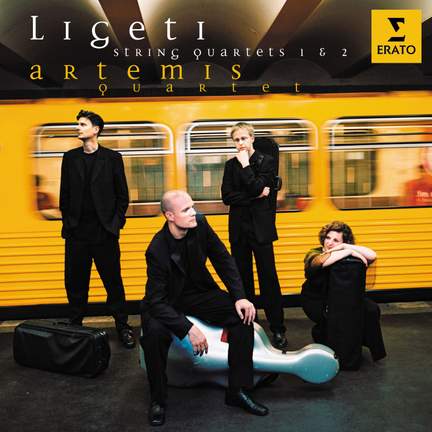
…in the sequence of short movements of the Bartók-inspired First Quartet, their impetuosity matches the quicksilver reverses of mood and texture, and the slower music isn't short-changed. The...
Ligeti: String Quartet No. 1 'Métamorphoses nocturnes', etc.
Artemis Quartet
Purchase product

We pay more royalties to artists and composers than any other streaming service with our innovative Fair Play pay-per-second model
We pay artists and composers fairly with our pay-per-second model
…in the sequence of short movements of the Bartók-inspired First Quartet, their impetuosity matches the quicksilver reverses of mood and texture, and the slower music isn't short-changed. The...
About
Contents and tracklist
- Artemis Quartet
- Recorded: 1999-11-05
- Recording Venue: 19-21 October & 2-5 November 1999. Funkhaus Wallrefplatz, Klaus von Bismarck-Saal, Köln.
- Artemis Quartet
- Recorded: 1999-11-05
- Recording Venue: 19-21 October & 2-5 November 1999. Funkhaus Wallrefplatz, Klaus von Bismarck-Saal, Köln.
Awards and reviews
 December 2005
…in the sequence of short movements of the Bartók-inspired First Quartet, their impetuosity matches the quicksilver reverses of mood and texture, and the slower music isn't short-changed. The modernist Second Quartet… allows more detail to come through, and shows their total command of all Ligeti's demands for technical and dynamic extremes.
 2010
2010
Few string quartets of the late 20th century are as often performed as these, and it was only a matter of time before one of the up-and-coming younger ensembles took up the challenge thrown down by the Arditti Quartet in their recent rerecording of both pieces for Sony (their earlier reading on Wergo dates from the late 1970s).
The First Quartet, Métamorphoses nocturnes, dates from Ligeti's Hungarian period, and the evident debt to Bartók notwithstanding, his approach to mass and textural transformation is recognisable to anyone familiar with his later music. To their credit, the Artemis let the music breathe, and make much of Ligeti's impish humour: both works are theatrical and benefit from being 'played up', which the Artemis do perhaps more freely than the Ardittis.
The Artemis are miked closely, but the sound still allows for some beautifully differentiated, 'atmospheric' timbres (like the 'organ-stops' of bar 71, first movement). There's also a more palpable sense of immediacy, and a more riotous climax in the most abrupt passages (the ferocissimo fourth movement, most obviously). The Artemis offer a sufficiently different view from the Ardittis to make for an unmissable alternative.
First-time buyers need not hesitate.