Peter Sculthorpe: Orchestral Works
William Barton (didjeridu), Tamara Anna Cislowska (piano)
New Zealand Symphony Orchestra, James Judd
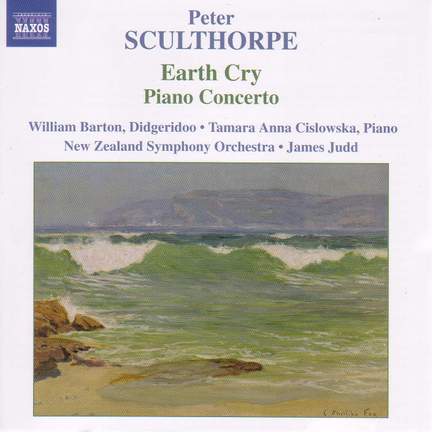
Earth Cry (1986), previously recorded in 1989 by Stuart Challender, is one of Sculthorpe's major utterances, music at once approachable and elusive.
These aspects are extraordinarily heightened...
Peter Sculthorpe: Orchestral Works
William Barton (didjeridu), Tamara Anna Cislowska (piano)
New Zealand Symphony Orchestra, James Judd
Purchase product

We pay more royalties to artists and composers than any other streaming service with our innovative Fair Play pay-per-second model
We pay artists and composers fairly with our pay-per-second model
Earth Cry (1986), previously recorded in 1989 by Stuart Challender, is one of Sculthorpe's major utterances, music at once approachable and elusive.
These aspects are extraordinarily heightened...
About
Contents and tracklist
- William Barton (didjeridu)
- New Zealand Symphony Orchestra
- James Judd
- Recorded: 10-12 September 2003
- Recording Venue: Wellington Town Hall, New Zealand
- New Zealand Symphony Orchestra
- James Judd
- Recorded: 10-12 September 2003
- Recording Venue: Wellington Town Hall, New Zealand
- Tamara Anna Cislowska (piano)
- New Zealand Symphony Orchestra
- James Judd
- Recorded: 10-12 September 2003
- Recording Venue: Wellington Town Hall, New Zealand
- New Zealand Symphony Orchestra
- James Judd
- Recorded: 10-12 September 2003
- Recording Venue: Wellington Town Hall, New Zealand
- New Zealand Symphony Orchestra
- James Judd
- Recorded: 10-12 September 2003
- Recording Venue: Wellington Town Hall, New Zealand
Awards and reviews
 2010
2010
Earth Cry (1986), previously recorded in 1989 by Stuart Challender, is one of Sculthorpe's major utterances, music at once approachable and elusive.
These aspects are extraordinarily heightened by a recently added didgeridoo part. The two recordings here use this new version sound quite different. Judd revels in a harsher orchestral sound, spotlighting each detail, while Christie conjures a more rounded tone, though edgy and laden with menace. William Barton's haunting didgeridoo playing is quite different on each.
Kakadu (1988), another shared item, finds both Judd and Christie alive to every nervy detail, though Christie responds more naturally to its mercurial changes. It's Challender, however, who finds the sheer joy: his interpretation is unsurpassed. He's also unbeatable in Mangrove, another heavyweight score that repays further investigation, though Christie summons a shining performance and shows a fine understanding of every nuance of the intricate orchestration.
Christie's disc includes another work revised to include didgeridoo: From Ubirr, which is conceptually and audibly related to Earth Cry. Sculthorpe wrote it for Kronos, and Christie has arranged it for larger forces. The orchestra finds greater sonic depth and the didgeridoo emphasises the earthy quality of the music. Songs of Sea and Sky, originally for clarinet and piano, also benefits from expansion from its original chamber format.
The mesmerising Piano Concerto, dating from 1983, is one of Sculthorpe's finest creations.
Tamara Anna Cislowska has already recorded it with Edo de Waart, a relaxed performance with 'impressionistic' orchestral sound; this Naxos recording is sharper. Judd also includes a work from Sculthorpe's 'sun music' period, From Oceania (1970/2003), more ostentatiously bright and more 'foreign' than later works, as well as the affecting and straightforward Memento Mori (1993).
Sculthorpe lovers will want both these recordings, but for a one-disc showcase of his work the programme and performances of the Queensland Orchestra have the edge.