Rachmaninnoff: Piano Concertos 1-4
Vladimir Ashkenazy (piano)
London Symphony Orchestra, André Previn
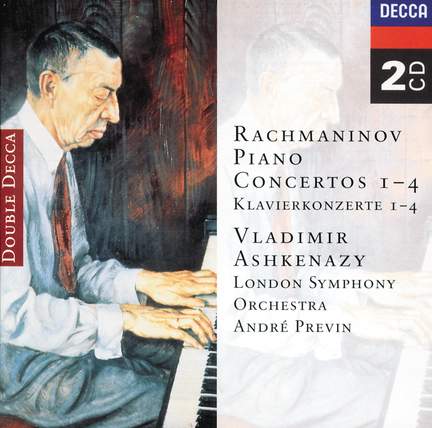
The Rachmaninov dream team of the 1970s play this much-hackneyed score with a freshness, moving sincerity and exhilarating emotional power that galvanises the attention from start to finish....
Rachmaninnoff: Piano Concertos 1-4
Vladimir Ashkenazy (piano)
London Symphony Orchestra, André Previn
Purchase product

We pay more royalties to artists and composers than any other streaming service with our innovative Fair Play pay-per-second model
We pay artists and composers fairly with our pay-per-second model
The Rachmaninov dream team of the 1970s play this much-hackneyed score with a freshness, moving sincerity and exhilarating emotional power that galvanises the attention from start to finish....
About
Contents and tracklist
- Vladimir Ashkenazy (piano)
- London Symphony Orchestra
- André Previn
- Recorded: 1970-03-26
- Recording Venue: Kingsway Hall, London
- Vladimir Ashkenazy (piano)
- London Symphony Orchestra
- André Previn
- Recorded: 1970-10-23
- Recording Venue: Kingsway Hall, London
- Vladimir Ashkenazy (piano)
- London Symphony Orchestra
- André Previn
- Recorded: 1971-03-30
- Recording Venue: Kingsway Hall, London
- Vladimir Ashkenazy (piano)
- London Symphony Orchestra
- André Previn
- Recorded: 1970-10-23
- Recording Venue: Kingsway Hall, London
Awards and reviews
 March 2010
The Rachmaninov dream team of the 1970s play this much-hackneyed score with a freshness, moving sincerity and exhilarating emotional power that galvanises the attention from start to finish. More than any other version, Ashkenazy and Previn exhilarate in the music's expressive propulsiveness and energy, so that the final grand statement of one of Rachmaninov's most indelible melodies arrives like an overwhelming affirmation of the composer's rediscovery of his creative impulse.
 2010
2010
Despite the recording dates, the sound and balance are superb, and there's nothing to cloud your sense of Ashkenazy's greatness in all these works. From him every page declares Rachmaninov's nationality, his indelibly Russian nature. What nobility of feeling and what dark regions of the imagination he relishes and explores in page after page of the Third Concerto.
Significantly his opening is a very moderate Allegro ma non tanto, later allowing him an expansiveness and imaginative scope hard to find in other more 'driven' or hectic performances. His rubato is as natural as it's distinctive, and his way of easing from one idea to another shows him at his most intimately and romantically responsive.
There are no cuts, and his choice of the bigger of the two cadenzas is entirely apt, given the breadth of his conception. Even the skittering figurations and volleys of repeated notes just before the close of the central Intermezzo can't tempt Ashkenazy into display and he's quicker than any other pianist to find a touch of wistfulness beneath Rachmaninov's occasional outer playfulness (the scherzando episode in the finale).
Such imaginative fervour and delicacy are just as central to Ashkenazy's other performances.
His steep unmarked decrescendo at the close of the First Concerto's opening rhetorical gesture is symptomatic of his Romantic bias, his love of the music's interior glow. And despite his prodigious command in, say, the final pages of both the First and Fourth Concertos, there's never a hint of bombast or a more superficial brand of fire-and-brimstone virtuosity. Previn works hand in glove with his soloist. Clearly, this is no one-night partnership but the product of the greatest musical sympathy. The opening of the Third Concerto's Intermezzo could hardly be given with a more idiomatic, brooding melancholy, a perfect introduction for all that's to follow.
If you want playing which captures Rachmaninov's always elusive, opalescent centre then Ashkenazy is hard to beat. (The Second Concerto is available on a single disc and is reviewed on page 885.)