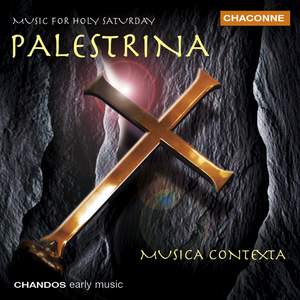


Palestrina - Music for Holy Saturday
Musica Contexta, Simon Ravens
This outstanding recording of music for Holy Saturday opens with two lessons from the third of Palestrina's four settings of texts from Lamentations, passages chanted during the Office of Tenebrae...
Palestrina - Music for Holy Saturday
Musica Contexta, Simon Ravens
Purchase product
This outstanding recording of music for Holy Saturday opens with two lessons from the third of Palestrina's four settings of texts from Lamentations, passages chanted during the Office of Tenebrae...
About
Contents and tracklist
Palestrina:
Lamentationes Jeremiae Prophetae, Book III, Sabbo Sancto: I. De Lamentatione Jeremiae Prophetae
Work length9:36
- Musica Contexta, Simon Ravens
Palestrina:
Lamentationes Jeremiae Prophetae, Book III, Sabbo Sancto: II. Quomodo obscuratum est aurum
Work length7:58
- Musica Contexta, Simon Ravens
Palestrina:
Lamentationes Jeremiae Prophetae, Book III, Sabbo Sancto: III. Incipit oratio Jeremiæ prophetæ
Work length8:49
- Musica Contexta, Simon Ravens
Awards and reviews
2010
This outstanding recording of music for Holy Saturday opens with two lessons from the third of Palestrina's four settings of texts from Lamentations, passages chanted during the Office of Tenebrae on the last three days of Holy Week.
The third lesson is Palestrina's superb setting of the Prayer of Jeremiah.
The performance is objectively straightforward, allowing the music, in its utter poignancy expressed with marked restraint, to speak for itself. The clarity of the individual voices is remarkable and the acoustic clear, yet warm: even the six-part final cry, 'Jerusalem… convertere ad Dominum Deum tuum', comes across with perfect intelligibility. In the chanted liturgy each lesson is followed by a florid reponsory, and full marks should go to Musica Contexta for transcribing these chants from Giovanni Guidetti's edition of 1587, which naturally comes from the right place and is of the right date.
Though the responsories might have been better in a slower, more determinedly solemn style, these singers are well on the way to achieving perfection here. It's particularly interesting to hear them sing Palestrina's wonderful Sicut cervus, with its surging phrases, and also his famous Stabatmater for double choir, displaying that dramatic alternation between antiphonal choir and combined choral sections. For maximum effect, more antiphonal distinction might have helped in the choir – versus – choir sections; but overall this is a well-thought-out and moving performance.