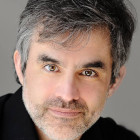
 Most people's awareness of female composers is heavily balanced towards the last few centuries, and indeed even the last few decades. If asked to look further back into history, one might name the twelfth-century German polymath Hildegard of Bingen, but she often seems to resemble an isolated outpost, or even to be regarded as the first recorded female composer.
Alexander Lingas, though, in the company of his choir Cappella Romana, has left Bingen far behind and recorded a mesmerising album of works by someone who was already a distant historical figure when she was born – Kassianí, also known as Kassía, who lived and worked in what was then Constantinople in the ninth century, and about whom many stories have grown up. She is reported to have been wooed by the future emperor Theophilos, rejecting him (in some versions quite stingingly!) in favour of devotion to her religion. Regardless of the truth of this, her gifts as a composer and poet were undeniable; compositions by Kassía continue to be performed liturgically within the Eastern Orthodox Church to this day, in particular an extended and deeply moving Troparion for Holy Wednesday.
Lingas's research into Byzantine musical traditions, and Kassía's work, makes him the perfect person to present this striking style of music; indeed his choir is devoted primarily to performing works from the Eastern Orthodox Church (amassing a considerable discography of works both ancient and modern). I spoke to him to dive further into Kassía's fascinating world.
This is the 25th album released by your ensemble Cappella Romana. How did you come to found a choir devoted primarily to the performance of Eastern Orthodox chant?
I grew up in the Greek Orthodox Church and by the time I finished my undergraduate degree I was singing both as an Orthodox cantor and a performer of Western plainchant and polyphonic choral music. Having previously conducted a student Early Music group concentrating on Monteverdi and his contemporaries, in 1991 I assembled a group of friends under the name 'Cappella Romana' to perform a concert benefiting the rebuilding fund of San Francisco's Annunciation Greek Orthodox Cathedral, which had been damaged beyond repair by the 1989 earthquake. We performed in Portland, Oregon and San Francisco a programme of 'Orthodox Music: Ancient and Modern' that covered the full spectrum from medieval and received traditions of Byzantine chant to Rachmaninov and Tavener. The performances went well enough that we decided to keep the ensemble going. As we did so, during the 1990s I had periods of study in Greece with cantor Lykourgos Angelopoulos and completed a PhD thesis on the rite of the Great Church of Hagia Sophia. Today Cappella Romana continues to specialise in Eastern Orthodox music composed from late antiquity to the present.
The composer now known as Kassía lived and worked in the ninth century in what was then Constantinople, present-day İstanbul. What would have been the main musical influences on her as she was developing her craft and writing the hymns heard here?
Kassía wrote her hymns at a time when certain Constantinopolitan churches, both monastic and secular (notably including those of the Imperial Palace), were creatively synthesising the musical traditions of the Holy City of Jerusalem (the 'Hagiopolites') with those of the Great Church of Hagia Sophia (the 'Ecclesiastes'). Kassia's liturgical works are all contributions to the repertories of Hagiopolite hymnody, but in worship she would have also sung psalms and hymns from the cathedral rite of Constantinople. As a young aristocrat, she would certainly have heard various forms of secular music, which was performed in abundance in circumstances ranging from imperial ceremonial to entertainment, both public and private. It is also possible that she had some exposure to ancient Greek music theory.
Kassía is known today for her liturgical music, in particular the hymn which bears her name and has gained her the reputation of being merely a one-hit wonder. Is there any evidence that she wrote in any other styles too – would that have been plausible for a composer in her context?
As an author of texts, she has left us letters and non-liturgical poetry. With the exception of imperial acclamations and small number of illustrative examples in treatises of ancient music theory, the East Romans (or as we saw now, 'Byzantines') appear not to have used notation to record their non-liturgical music. It is therefore very unlikely that she ever tried to write what we would call secular music.
To have a work from over a millennium ago performed uninterruptedly down to the present day seems an incredible miracle of survival; how did Kassía’s Hymn escape being superseded over the centuries, as some of her other works were?
The hymn for Holy Wednesday is one of several dozen hymns by Kassía that have remained in liturgical use within Byzantine Christianity since the time of their composition. In many cases, however, her authorship of them has in many cases been obscured in published service books. Their rapid distribution in manuscripts from Southern Italy to the Middle East set the stage for their survival. What ensured it was their inclusion in what modern scholars call the 'Standard Abridged Version' of the Sticherarion, a musically notated collection of selected hymns with unique melodies ('Idiomela' in Greek) that appears to have been compiled sometime before the middle of the eleventh century. Although the melodies of this hymnal have been periodically recodified, its core contents have remained stable for nearly a millennium.
Kassía is the best-known female composer from this period, and presumably the only one whose name we know, but you mention that she was not alone. Do we know anything about how she and her other female colleagues were regarded by Byzantine society?
We actually know the names of two more women hymnographers from Kassía's time: Theodosia and Thekla, each of whom is represented by a single multi-stanza hymn in modern publications. The general attitude seems to have been one of respect for their literary and musical achievements, evident both from the qualitative judgements of church historians and the fact, at least for Kassía and Thekla, of the wide dissemination of their hymns. For Kassía, on the other hand, we also have evidence of resistance by some ecclesiastical authorities: accounts of the active suppression of her four-ode kanon for Holy Saturday and its replacement by the work of a male hymnographer, as well as the conflicting attributions for her hymns in manuscripts.
Thanks to the fifteenth-century historian Sphrantzes, we also know the existence of another and apparently prolific female hymnographer of the fourteenth century with the surname 'Palaiologina' (suggesting that she was related to the ruling dynasty of the Paleaiologans). None of her hymns appear to have made it into published service books and scholars have yet to identify any in manuscripts (which may not be too surprising, given how much work still needs to be done to catalogue the contents of later Byzantine and post-Byzantine liturgical manuscripts). Finally, one manuscript dated 1453 attributes a communion verse to the unnamed daughter of composer John Kladas (fl.1400).
Even today, Orthodox chant is often notated in very different systems to what a Western-educated musician would ordinarily be able to read. What sort of written record of Kassía’s ancient hymns survives, and how easy is it to reconstruct for performance?
The challenges are in many ways similar to those for Western medieval music. Like Gregorian chant, the earliest musically notated manuscripts employ forms of notation that are non-diastematic notations, that is they do not indicate with precision a melody's sequence of intervals (Greek diastemata). These are succeeded by a fully diastematic system that first appears in dated sources from the 1170s and then remains in use through the first quarter of the nineteenth century. This system, called 'Middle Byzantine Notation' by modern scholars, confidently renders a melody's succession of musical intervals, the placement of various kinds of ornaments, and the rhythmic lengthening of specific notes. Left to the performer to learn from oral tradition or notational context were subdivisions of the basic beat, the tunings of the modes, chromatic inflections, and vocal timbre.
Close study of medieval manuscripts of notated chant and musical theory can provide solutions to some of these questions. Cappella Romana's longtime collaborator Ioannis Arvanitis, for example, has done much to clarify the rhythmic structure of medieval Byzantine notation, especially as applied to hymns in Jerusalemite genres. Unlike our colleagues specialising in medieval Latin plainchant, scholars and performers of Byzantine chant can refer also to literary and oral witnesses from the vibrant received traditions of liturgical chanting.
Given the immense controversy about authenticity in performance of liturgical chant (be it Gregorian or Byzantine), and the 1200 years separating us from Kassía, how confident can we truly be that the performances on this album represent something close to what would have been heard in her own time?
Although we possess no notated manuscripts from Kassía's own time, the uniformity and stability of their transmission from their earliest appearance with non-diastematic (Palaeo-Byzantine) and diastematic (Middle Byzantine) notations argue strongly for melodic continuity from the time of their composition to the end of the Middle Ages (and beyond). Controversies surrounding the performance of medieval Byzantine chant over the past century have been as much cultural and socio-political as they have been musical, relating to questions surrounding the historical continuity of modern identities.
One problem is how to explain differences in the notation of particular hymns between their appearance in medieval manuscripts with Middle Byzantine Notation and their renderings in the reformed 'New Method' of notation introduced in early nineteenth-century Constantinople. By the time of the New Method's introduction, it had become customary to read groups of signs constituting common musical formulas of medieval chant as a kind of shorthand for phrases that in performance were sung at double or even quadruple their apparent written length. The problem with assuming, as traditionalist Greek scholars have done, that medieval cantors universally read their chantbooks in this manner is that the length of the Divine Office often outgrows the confines of a 24-hour day. The alternative is to accept that the medieval manuscripts should normally be read, like more recent sources of chant, at face value. This results in melodies that may sound more or less familiar to modern congregants as a result of natural development, but otherwise are comparable in their relative durations to the chants codified in the late eighteenth century that form the core liturgical repertory of the mainstream received tradition.
For those coming to medieval Byzantine chant from a Western perspective, the controversies have tended to stem from modern perceptions of received traditions of Greek and Arab Orthodox singing as (too) 'Oriental'. This led some of the founders of Byzantine musicology as field of study in Western academia to speak disparagingly of contemporary Greek Orthodox chanting as irredeemably corrupted by Arab, Persian and Turkish influence.
In addition to Kassía’s Hymn itself, this recording also includes a reworking of it by a mysterious monastic composer in around the thirteenth century. How common was (and is) this process of rearrangement of chants and hymns in the Orthodox tradition, adapting them to changing musical styles?
Such rearrangement is extremely common within the musical traditions of the Byzantine rite. The setting that concludes Hymns of Kassianí is the product of a period of vibrant musical creativity that musicologist Edward Williams memorably named 'A Byzantine Ars nova'. Between the thirteenth and fifteenth centuries cantor-composers of Byzantine chant, the most famous of which was John Koukouzelis, both reworked older collections and composed vast quantities of new music in a variety of styles. Some of this reworking took the form of light editing to bring written sources into line with contemporary oral tradition. The kind of reworking represented by this anonymous arrangement of Kassía's hymn was much more thorough, transforming originally compact and rhetorically powerful setting into a longer and more abstractly musical work in the style known as kalophonia ('beautiful sounding').
Looking across cultures, we can musical reworking related to processes of inculturation and indigenisation. Byzantine chant of the eleventh century was transmitted to Kievan Rus', where over time it developed into the core northern Slavic repertory of Znamenny chant. The northern Slavs then later supplemented this body of chant inherited from Byzantium with other repertories, among which are two repertories witnessing to periods of renewed musical influence from the Balkans during the seventeenth century: the so-called 'Greek' and 'Bulgarian' chants. These were further augmented by polyphony in indigenous ('strochy' and 'demestvenny') and Western European styles, leading to the development of the Russian choral tradition.
After the fall of Constantinople in 1453, processes of reworking and further developing received repertories resumed within the Ottoman sphere of cultural influence during the later sixteenth century and have continued to the present day. The mainstream tradition of Byzantine chanting practised today across a geographic arc from Mount Sinai to Moldavia employs a core repertory codified mainly by cantors of the Ecumenical Patriarchate of Constantinople during the late eighteenth and early nineteenth centuries.
In the contemporary musical marketplace, liturgical chant (and compositions based on it, like some works of the late John Tavener) is often presented as capturing a serenity and clarity that later musical idioms lack. How much do you think this nostalgic picture of “a simpler time” is accurate?
As anyone who has studied the thousand-year history of politics, theology, or literature in the Eastern Roman Empire can attest, late antique and medieval church musicians of the Christian East lived in societies that were in many respects highly sophisticated. In liturgical music this sophistication can be seen in the poetic texts, notational systems, and melodic construction of chants lasting in some cases over an hour, as well as in their deployment within the complex services of the rites of Constantinople and Jerusalem. Furthermore, becoming a fluent practitioner of the received tradition of Byzantine chanting remains a major undertaking. Greece has a 5-year curriculum for a diploma in Byzantine chant that is administered alongside diplomas for Western European Art Music.
Bearing this in mind, it seems to me that relegating the ancient repertories of Christian plainchant to 'a simpler time' without further qualification can take us into the realms nostalgic fantasy born of European Romanticism. Although it has become so prevalent that modern listeners seldom question its historical basis, the idea that Latin plainchant has a distinctively ethereal sound is itself a product of Romantic ideals as refracted by the monks of Solesmes in their late nineteenth-century 'restoration' of Gregorian chant (for some hints of the performance practices displaced by this style, consider variously oral traditions surviving on the European periphery (notably Corsica) or the way that Classical and early Romantic composers used plainchant (for example, Berlioz's Symphonie Fantastique). When notions of 'primordial simplicity' are unthinkingly applied specifically to Byzantine chant, we stray into the realms of Western Exoticism and Orientalism.
All that being said, I think that there are still ways of reconciling the modern view of 'serenity and clarity' with the sophistication characteristic of the most elaborate ancient traditions of Christian chant. Accomplishing this requires one to return to the things that interested ancient and medieval theorists and philosophers of music, beginning with the ethical and cosmic dimensions of particular modes and tunings. I also think that it would be useful to consider the relevance of distinctions between pre-modern and modern notions of time in music made in different ways by Marcel Pérès and, at length in his book Bach's Cycle, Mozart's Arrow: An Essay on the Origins of Musical Modernity (2007), Karol Berger.

Photini Downie Robinson, Catherine van der Salm, Anya Thetford, John Michael Boyer, Stelios Kontakiotis, Cappella Romana, Alexander Lingas
Available format: Download & Streaming (up to 192 kHz, 24 bit)