

Sheet Music Downloads: Delivery is currently taking longer than usual. We’re working to restore instant access as soon as possible. Audio downloads are processing as normal.
Dance Teaching Methods and Curriculum Design: Comprehensive K-12 Dance Education
- Author: Jay-Kirschenbaum, Danielle
- Author: Kassing, Gayle
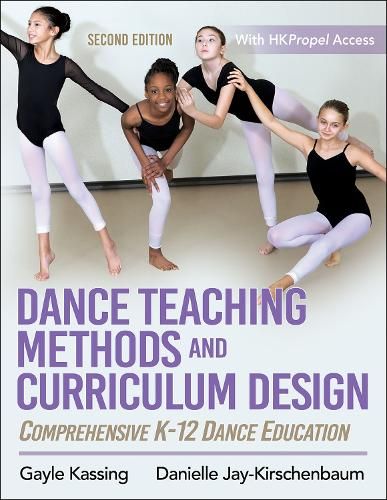
Dance Teaching Methods and Curriculum Design: Comprehensive K-12 Dance Education
- Author: Jay-Kirschenbaum, Danielle
- Author: Kassing, Gayle
Purchase product
About
This new edition of Dance Teaching Methods and Curriculum Design is ideal for preparing undergraduate students to teach dance education. Students will learn a conceptual and comprehensive model of dance education that embraces dance as an art form and a lifelong physical activity. Students will gain the tools they need to teach various dance forms, create effective lesson and unit plans, and develop a curriculum that meets arts and education standards.
The second edition of this foundational text uses a holistic approach to dance pedagogy for teaching children through adults in school and community environments. It also introduces theories from multiple disciplines and helps students apply those theories and processes when creating lesson and unit plans.
New Material
Dance Teaching Methods and Curriculum Design offers much new material:
- Four new sample dance units (up from 10 in the previous edition)
- Many useful instructor ancillaries, including an instructor guide, a presentation package, and a test package; students can submit their work electronically, and quizzes are automatically graded
- Resources delivered on HKPropel, including a variety of projects, printable forms, and video clips that demonstrate selected steps, movements, exercises, and combinations of different dance forms
- Beyond Technique assignments, which have been field tested in university courses, to help students see firsthand what a dance teacher does
The sample dance units offer a comprehensive guide for teaching popular dance forms, and they now cover a greater diversity of styles, including hip-hop, Mexican folkloric, African, and line dance. In addition, the new ancillaries offer scope and sequence plans and block time plans for all 14 dance units, as well as all printable forms from the book.
Dance Portfolio
Another great feature of the book is the dance portfolio that students will create as they work through the text. This portfolio will help them demonstrate their ability to create lesson plans, a unit plan, and a complete dance curriculum. The students will develop these abilities as they complete chapters 1 through 13. Chapter 14 then walks students through assembling the sections of the portfolio. Projects the student can complete to include within their portfolio are available on HKPropel.
Step-by-Step Approach
Dance Teaching Methods and Curriculum Design offers students a step-by-step course of study for how to teach dance and create sustainable dance programs in schools. The authors synthesize a wide variety of research and resources to support dance pedagogy and curriculum development, provide the infrastructure to meet the changing needs of students to teach dance in the 21st century, and supply extensive references for students to use to increase their dance education knowledge.
Book Organization
The text is organized into three parts. Part I covers information specific to teaching dance and understanding learners from grades preK through 12. Part II focuses on applying the dance knowledge gained from part I to the teaching and learning process in the four categories of dance forms. In part III, students learn how to develop unit plans and choose a curriculum design for their dance programs.
Filling a Void
Dance Teaching Methods and Curriculum Design, Second Edition, addresses the knowledge, skills, processes, and content that students need as they prepare to teach dance in various settings. This text fills a void in dance education literature, studying all the steps as it provides students the foundational knowledge and practical know-how they need to confidently begin teaching dance in schools, recreation programs, or private dance studios.
Note: A code for accessing HKPropel is included with this ebook.
Contents
- Part I. Teaching Dance
- Chapter 1. Envisioning Dance Education
- Defining Dance and Dance Education
- Distinguishing Between Dancers and Dance Educators
- Teaching Dance in the 21st Century
- Relating Standards for Dance to Dance Education
- Understanding the Teaching and Learning Process Model in Dance
- Summary
- Application Activities
- Chapter 2. Teaching Dance From a Holistic Perspective
- Comprehensive Dance Knowledge Model
- Supportive Knowledge
- Dance Training, Conditioning, and Wellness
- Technique and Choreography
- Education Theories for Teaching Dance
- Artistic Development
- Summary
- Application Activities
- Chapter 3. Observing and Analyzing the Teaching and Learning Situation
- Understanding Observation Techniques in the Dance Class
- Applying Kinesiology Observation to Dance
- Developing Observation Skills
- Summary
- Application Activities
- Chapter 4. Guiding Students in Learning Dance
- Three Styles of Student Learning
- Three Stages of Motor Learning
- Movement-Language Connection in Dance
- Constructing the Dance Class
- Summary
- Application Activities
- Chapter 5. Understanding Dance Teaching Methods
- Choosing a Presentational Method
- Teaching Strategies for the Dance Class
- Teaching Methods for Specific Dance Forms
- Understanding Music and Accompaniment in the Dance Class
- Summary
- Application Activities
- Chapter 6. Organizing and Managing the Dance Class
- Creating a Positive Learning Atmosphere
- Managing the Dance Classroom
- Dealing With Student Behaviors in the Dance Classroom
- Developing a Philosophy of Teaching Dance
- Summary
- Application Activities
- Chapter 7. Analyzing the Learner and the Learning Environment
- Understanding Characteristics of Different Learners
- Developing Social and Emotional Behaviors in the Dance Class
- Understanding Dance and the Dance Teacher in K-12 Education
- Characterizing the Community
- Identifying Values in the Community
- Summary
- Application Activities
- Chapter 8. Categorizing Dance Forms and Their Artistic Demands
- Gathering Content Information to Teach Dance
- Identifying Characteristics of Dance Forms
- Understanding the Format of the Dance Class
- Dance and Other Disciplines
- Utilizing Principles of the Dance Form
- Teaching Artistic Development
- Summary
- Application Activities
- Part II. Lesson Plans
- Chapter 9. Developing the Lesson Plan
- Setting Up Effective Dance Learning Experiences
- Describing the Lesson Plan
- Relating Objectives or Outcomes to a Learning Taxonomy
- Summary
- Application Activities
- Chapter 10. Selecting Appropriate Assessment Strategies for Dance
- Using Assessment Techniques in the Dance Class
- Grading Students' Work
- Summary
- Application Activities
- Chapter 11. Writing and Delivering the Lesson Plan
- Writing the Lesson Plan
- Teaching the Lesson
- Exploring Other Options
- Summary
- Application Activities
- Part III. Curriculum Plans
- Chapter 12. Creating a Curriculum
- Surveying Options for Discipline-Based Dance Curriculum Models
- Starting the Instructional Design Process
- Writing a Dance Curriculum
- Formally Evaluating Dance Curricula and Programs
- Summary
- Application Activities
- Chapter 13. Sample Units for Dance Forms
- Overview of Dance Forms
- Teaching Overview
- Content Overview
- Unit 13.1: Creative Movement and Creative Dance
- Unit 13.2: Folk Dance
- Unit 13.3: Cultural Dances of Africa
- Unit 13.4: Mexican Folkloric Dance
- Unit 13.5: Square Dance
- Unit 13.6: Contra Dance
- Unit 13.7: Line Dance
- Unit 13.8: Social Dance
- Unit 13.9: Ballet
- Unit 13.10: Modern Dance
- Unit 13.11: Jazz Dance
- Unit 13.12: Tap Dance
- Unit 13.13: Hip-Hop Dance
- Unit 13.14: Dance Fitness
- Chapter 14. Culminating Curriculum Portfolio
- Depicting the Teaching Environment
- Describing the Learner
- Selecting Dance Content for Each Unit Plan
- Devising Learning Experiences for the Dance Form
- Writing the Lesson Plans
- Appendix
