Steve Lacy: Conversations
- Editor: Weiss, Jason
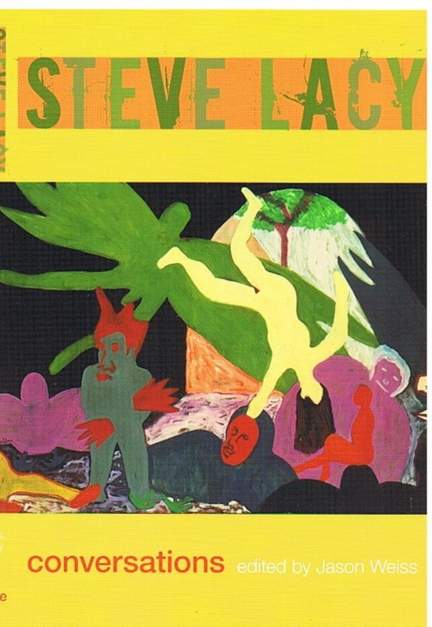
A phenomenal interviewee. . . . Whether [Steve Lacy] was making bold predictions on future directions of the music, describing his fascinating projects, laying forth broad challenges to himself...
Steve Lacy: Conversations
- Editor: Weiss, Jason
Purchase product
A phenomenal interviewee. . . . Whether [Steve Lacy] was making bold predictions on future directions of the music, describing his fascinating projects, laying forth broad challenges to himself...
About
Steve Lacy: Conversations is a collection of thirty-four interviews with the innovative saxophonist and jazz composer. Lacy (1934–2004), a pioneer in making the soprano saxophone a contemporary jazz instrument, was a prolific performer and composer, with hundreds of recordings to his name.
This volume brings together interviews that appeared in a variety of magazines between 1959 and 2004. Conducted by writers, critics, musicians, visual artists, a philosopher, and an architect, the interviews indicate the evolution of Lacy’s extraordinary career and thought. Lacy began playing the soprano saxophone at sixteen, and was soon performing with Dixieland musicians much older than he. By nineteen he was playing with the pianist Cecil Taylor, who ignited his interest in the avant-garde. He eventually became the foremost proponent of Thelonious Monk’s music. Lacy played with a broad range of musicians, including Monk and Gil Evans, and led his own bands. A voracious reader and the recipient of a MacArthur “genius” grant, Lacy was particularly known for setting to music literary texts-such as the Tao Te Ching, and the work of poets including Samuel Beckett, Robert Creeley, and Taslima Nasrin-as well as for collaborating with painters and dancers in multimedia projects.
Lacy lived in Paris from 1970 until 2002, and his music and ideas reflect a decades-long cross-pollination of cultures. Half of the interviews in this collection originally appeared in French sources and were translated specifically for this book. Jason Weiss provides a general introduction, as well as short introductions to each of the interviews and to the selection of Lacy’s own brief writings that appears at the end of the book. The volume also includes three song scores, a selected discography of Lacy’s recordings, and many photos from the personal collection of his wife and longtime collaborator, Irene Aebi.
Interviews by: Derek Bailey, Franck Bergerot, Yves Bouliane, Etienne Brunet, Philippe Carles, Brian Case, Garth W. Caylor Jr., John Corbett, Christoph Cox, Alex Dutilh, Lee Friedlander, Maria Friedlander, Isabelle Galloni d'Istria, Christian Gauffre, Raymond Gervais, Paul Gros-Claude, Alain-RenÉ Hardy, Ed Hazell, Alain Kirili, Mel Martin, Franck MÉdioni, Xavier PrÉvost, Philippe Quinsac, Ben Ratliff, GÉrard Rouy, Kirk Silsbee, Roberto Terlizzi, Jason Weiss
Contents
- 4. Goodbye, New York (Garth W. Caylor, Jr., 1965) 24
- 5. Faithful Lacy (Philippe Carles, 1965) 33
- 6. Twenty-six New Jazzmen Put to the Question (1965) 41
- 7. Steve Lacy Speaks (Paul Gros-Claude, 1971) 43
- 8. Improvisation (Derek Bailey, 1974) 48
- 9. Evidence and Reflections (Alain-Rene Hardy and Philippe Quinsac, 1976) 52
- 10. On Play and Process, and Musiacal Insticnts (Raymond Gervais and Yves Bouliane, 1976) 62
- 11. In the Spirit (Roberto Terlizzi, 1976) 78
- 12. The Spark, the Gap, the Leap ( Brian Case, 1979) 84
- 13. In Search of the Way (Jason Weiss, 1980) 97
- 14. Songs: Steve Lacy and Brion Gysin (Jason Weiss, 1981) 104
- 15. Unrecognized Giean? (Xavier Prevost, 1982) 109
- 16. Futurities (Isabelle Galloni d'Istria, 1984) 111
- 17. The Solitude of the Long-Distance Player (Gerard Rouy, 1987) 115
- 18. On Practicing, and Exploring the Instrument (Kirk Silsbee, 1988) 123
- 19. Art is Made to Trouble (Christian Gauffre, 1990) 133
- 20. Shop Talk (Mel Martin, 1990) 138
- 21. It's Got to Be Alive (Ben Ratliff, 1991)
- 22. Regarding the Voice: Steve Lacy and Irene Aebi (Jason Weiss, 1993) 146
- 23. A Petite Fleur for S. B. (Philippe Carles, 1994) 156
- 24. Sculpture and Jazz (Alain Kirili, 1994) 158
- 25. One Shouldn't Make Too Much Noise, There's Enough Already (Franck Medioni, 1995) 163
- 26. Living Lacy (Gerard Rouy, 1995) 166
- 27. Scratching the Seventies (Etienne Brunet, 1996) 167
- 28. Forget Paris (John Corbett, 1996) 185
- 29. In the Old Days (Lee Friedlander and Maria Friedlander, 1997) 193
- 30. The Glorious Thirty (Franck Bergerot and Alex Dutilh, 2000) 208
- 31. Farewell Paris (Gerard Rouy, 2002) 212
- 32. Invisible Jukebox (Christoph Cos, 2002) 217
- 33. Big Kisses from Boston (Franck Medioni, 2003) 226
- 34. The Art of the Song: Steve Lacy and Irene Aebi (Ed Hazell, 2004) 228
- Part 2. Writings by Steve Lacy
- 1. MEV Notes (ca. 1968) 244
- 2. Roba (early 1970s) 248
- 3. Garden Variety (ca. 1974) 249
- 4. FMP: 10 Years Jubilee (ca. 1979) 250
- 5. What about Monk? (1980) 251
- 6. He Flew (1980) 253
- 7. In the Upper Air: Albert Ayler (1996 256
- 8. Shiro and I (1997) 257
- 9. Short Takes (1998) 258
- 10. Yoshizawa (1998) 260
- 11. Made in France (2000) 261
- 12. Song Sources (undated) 266
- 13. Residency Statement (2004) 267
- Part 3. Song Scores
- Dreams (1975) 272
- Mind's Heart (1982) 273
- 3 Haiku (1998) 274
- Selected Discography 277
- Credits 281
- Index 283
- Acknowledgments ix
- Introduction 3
- Part 1. Interviews with Steve Lacy
- 1. Introducing Steve Lacy (1959) 13
- 2. My Favorite Thing (1961) 17
- 3. The Land of Monk (1963) 20
Awards and reviews

A phenomenal interviewee. . . . Whether [Steve Lacy] was making bold predictions on future directions of the music, describing his fascinating projects, laying forth broad challenges to himself and other artists, or making succinct observations of the musical world he inhabited, Lacy's words proved to be almost as interesting as his music

This well-illustrated and attractively produced book collects interviews with Lacy and presents them chronologically. . . . [A] fitting tribute to one of the supreme masters of [the pure improvised] movement." -- Andy Hamilton