Choreomania: Dance and Disorder
- Author: Gotman, Kelina
Choreomania is as progressive in its historical methodologies as it is in its provocative analyses of heretofore undertheorized modes of movement, dance and gesture. I have no doubt that it...
Choreomania: Dance and Disorder
- Author: Gotman, Kelina
Purchase product
Other available formats

Choreomania is as progressive in its historical methodologies as it is in its provocative analyses of heretofore undertheorized modes of movement, dance and gesture. I have no doubt that it...
About
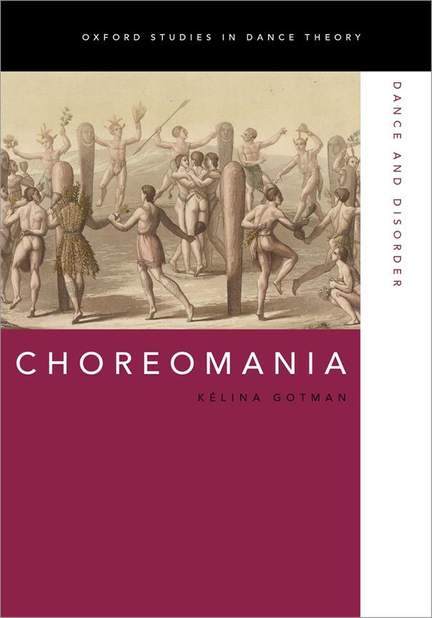
From the condemnation of protest to skepticism of religious ecstasy, radical movement has been defined by freedoms and restrictions relative to class conflict, national policy, and colonialism. In this book, author Kélina Gotman examines choreographies of unrest, rethinking the modern formation of choreomania, a fantastical concept across scientific disciplines used to designate the spontaneous and uncontrolled movements of crowds. In these misformations of body politics, prejudices against spontaneity unravel, suggesting widespread anxieties about impulsiveness and irregularity. In tandem with dialogues of the erratic, Gotman makes use of histories of nineteenth-century control which identify the period as one of increasing regimentation. As she notes, constraints on movement signal constraints on political power and agency and on individuals' capacity to shift their allegiances, inhabiting more hospitable terrains. In each chapter, Gotman confronts the many ways choreomania functions as an extension of colonialism, dismissing expressive bodies as mentally and physically infected others. Through her research, Gotman unearths the many instances of choreomania that represent collective efforts to escape social tyranny inflicted by the upper class.
Contents
- CONTENTS
- List of illustrations
- Foreword
- Preface
- Acknowledgments
- Introduction: Choreomania, Another Orientalism
- Part I: Excavating Dance in the Archives
- 1. Obscuritas Antiquitatis: Institutions, Affiliations, Marginalia
- 2. Madness after Foucault: Medieval Bacchanals
- 3. Translatio: St. Vitus's Dance, Demonism and the Early Modern
- 4. The Convulsionaries: Antics on the French Revolutionary Stage
- 5. Mobiles, Mobs and Monads: Nineteenth-Century Crowd Forms
- 6. Medecine Retrospective: Hysteria's Archival Drag
- Part II: Colonial and Postcolonial Stages: Scenes of Ferment in the Field
- 7. Sicily Implies Asia and Africa: Tarantellas and Comparative Method
- 8. Ecstasy-belonging in Madagascar and Brazil
- 9. Ghost Dancing: Excess, Waste and the American West
- 10. The Gift of Seeing Resemblances: Cargo Cults in the Antipodes
- 11. Monstrous Grace: Blackness and the New Dance Crazes
- 12. Coda: Moving Fields, Modernity and the Bacchic Chorus
- Bibliography
Awards and reviews
Theatre Research International
Choreomania is as progressive in its historical methodologies as it is in its provocative analyses of heretofore undertheorized modes of movement, dance and gesture. I have no doubt that it will deeply impact dance and performance studies as a pathbreaking analysis of social bodies in motion as well as an inspiring example of how the durable roots of rigorous critical and historical methodologies strengthen scholarship that stretches so far across geography and time