Wagner and the Erotic Impulse
- Author: Dreyfus, Laurence
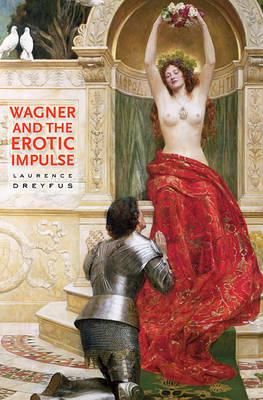
Even in this supposedly liberal era Wagner's detractors still wag fingers at his love-life...As this ground-breaking new study suggests, it's the erotic yearnings so central to his great works...
Wagner and the Erotic Impulse
- Author: Dreyfus, Laurence
Purchase product
Even in this supposedly liberal era Wagner's detractors still wag fingers at his love-life...As this ground-breaking new study suggests, it's the erotic yearnings so central to his great works...
About
Though his image is tarnished today by unrepentant anti-Semitism, Richard Wagner (1813–1883) was better known in the nineteenth century for his provocative musical eroticism. In this illuminating study of the composer and his works, Laurence Dreyfus shows how Wagner’s obsession with sexuality prefigured the composition of operas such as Tannhäuser, Die Walküre, Tristan und Isolde, and Parsifal. Daring to represent erotic stimulation, passionate ecstasy, and the torment of sexual desire, Wagner sparked intense reactions from figures like Baudelaire, Clara Schumann, Nietzsche, and Nordau, whose verbal tributes and censures disclose what was transmitted when music represented sex.
Wagner himself saw the cultivation of an erotic high style as central to his art, especially after devising an anti-philosophical response to Schopenhauer’s “metaphysics of sexual love.” A reluctant eroticist, Wagner masked his personal compulsion to cross-dress in pink satin and drench himself in rose perfumes while simultaneously incorporating his silk fetish and love of floral scents into his librettos. His affection for dominant females and surprising regard for homosexual love likewise enable some striking portraits in his operas. In the end, Wagner’s achievement was to have fashioned an oeuvre which explored his sexual yearnings as much as it conveyed—as never before—how music could act on erotic impulse.
Contents
- Wagner and the Erotic Impulse
Awards and reviews

Even in this supposedly liberal era Wagner's detractors still wag fingers at his love-life...As this ground-breaking new study suggests, it's the erotic yearnings so central to his great works that remain arresting. -- Michael Scott Rohan

[Dreyfus] has produced a scholarly yet eminently readable volume that will bewitch any opera-lover. Like a benign magician--like Wagner himself, perhaps--Dreyfus conjures up a vivid array of characters and allows them to reveal their innermost thoughts through their own words and deeds. Nietzche and Schopenhauer are there, as are Baudelaire, Bulow, Heine, D'Annunzio, Thomas Mann, Krafft-Ebing and Henry James. -- Daniel Snowman

The Nazis have cast a long, retrospective shadow over Wagner, but as Laurence Dreyfus argues in Wagner and the Erotic Impulse, what scandalized (and delighted) 19th-century listeners to Wagner's music was not its politics but its unbridled sensuality. Dreyfus explores the aesthetic and biographical issues (including the composer's fondness for wearing women's silk lingerie) with admirable clarity, laying bare an aspect of the composer that is both central and often strangely ignored. -- Adam Lively

Revelatory. -- Alex Ross

[Dreyfus's] persuasive contention is that this music is not only erotic to our ears and understanding, but that it was interpreted as such from the very start. Furthermore, he shows that the explicit connections of eroticism with music long predate the nineteenth century, going back at least as far as the terpsichorean tradition of the sixteenth century. Dreyfus impressively manages to argue that music can be interpreted as expressly erotic without getting himself entangled in the complexities of whether music can in general be assigned particular interpretation. -- Bernard O'Donoghue