

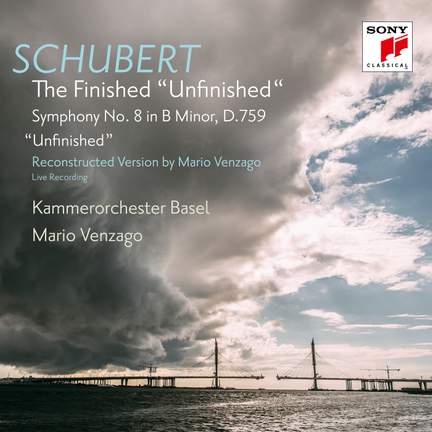
Schubert: Symphony No. 8 in B minor, D759 'Unfinished'
Completed version by Mario Venzago
Kammerorchester Basel, Mario Venzago
Rather more convincing than Venzago’s reconstructions of the third and fourth movements is his conducting of the opening two. With the incisive, lean, period-instrument timbres of the Basle...
Schubert: Symphony No. 8 in B minor, D759 'Unfinished'
Completed version by Mario Venzago
Kammerorchester Basel, Mario Venzago
Purchase product

Rather more convincing than Venzago’s reconstructions of the third and fourth movements is his conducting of the opening two. With the incisive, lean, period-instrument timbres of the Basle...
About
Mario Venzago is the principal conductor and artistic director of the Bern Symphony Orchestra, Artist in Association at Finland's Tapiola Sinfonietta and a regular guest conductor of the Kammerorchester Basel. Before taking up conducting, Venzago was a concert pianist at Radiotelevisione Svizerra in Switzerland, and performed throughout Europe as a soloist and accompanist. Several of his CDs have won international prizes. His recordings of the operas «Venus» and «Penthesilea» and of all choral works by Othmar Schoeck with the MDR choir and symphony orchestra received great international recognition and prestigious awards. Based in Basle, successful internationally – the Kammerorchester Basel/Basle Chamber Orchestra impresses audiences everywhere. The energy-charged concerts which sparkle with a love of music are the trademark of this creative top orchestra. As one of the few ensembles of its kind, the versatile Basle Chamber Orchestra is just as much at home playing baroque instruments as it is playing music from the 20th and 21st centuries. Basle Chamber Orchestra stands for the joy of making music together, a transparent and flexible orchestral sound, a desire for discovery in search of new ways of interpretations, and the programmatic combination of old and new music in the tradition of Paul Sacher's Basle Chamber Orchestra.
Contents and tracklist
Awards and reviews
 15th September 2017
Rather more convincing than Venzago’s reconstructions of the third and fourth movements is his conducting of the opening two. With the incisive, lean, period-instrument timbres of the Basle Chamber Orchestra at his disposal, he produces a radically different interpretation to the quasi-religious plod frequently heard.
