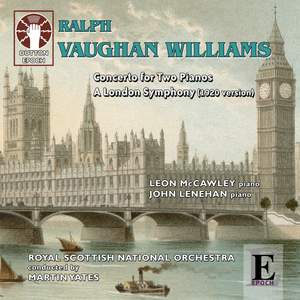


Vaughan Williams: Concerto for Two Pianos & A London Symphony (1920 version)
Leon McCawley (piano), John Lenehan (piano)
Royal Scottish National Orchestra, Martin Yates
At times we miss the focused punch of one piano's combat with the orchestra…yet 20 fingers certainly bring a heightened percussive charge in the final section's 'fuga chromatica'. Either way... — More…
Downloads
What are FLAC and MP3?Contents
Vaughan Williams: Concerto for Two Pianos
Work length26:36
$4.50
$6.30
- Royal Scottish National Orchestra, Leon McCawley (soloist), John Lenehan (soloist)
- Martin Yates
I. Toccata Allegro Moderato
Track length6:44
$1.00
$1.40
II. Romanza Lento
Track length8:45
$1.50
$2.10
III. Fuga Chromatica, Con Finale Alla Tedesca
Track length11:07
$2.00
$2.80
Vaughan Williams: (A London Symphony) Symphony No. 2
Work length48:40
$7.50
$10.50
- Royal Scottish National Orchestra, Leon McCawley (soloist), John Lenehan (soloist)
- Martin Yates
I. Lento − Allegro Risoluto
Track length13:17
$2.00
$2.80
II. Lento
Track length14:17
$2.00
$2.80
III. Scherzo Nocturne: Allegro Vivace
Track length7:13
$1.50
$2.10
IV. Finale: Andante Con Moto − Maestoso Alla Marcia Quasi Lento – Allegro − Maestoso Alla Marcia − Epilogue Andante Sostenuto
Track length13:53
$2.00
$2.80