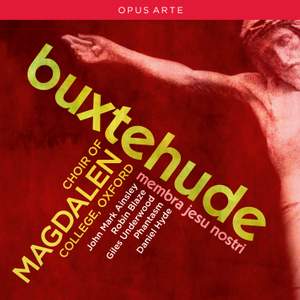


Buxtehude: Membra Jesu nostri, BuxWV75
John Mark Ainsley (tenor), Robin Blaze (counter-tenor) & Giles Underwood (bass)
Choir of Magdalen College, Oxford & Phantasm, Daniel Hyde
this new issue [has] a decidedly English slant, which provides striking contrasts with the many versions deploying continentally trained voices. The lightly articulated and youthful sounding...
Buxtehude: Membra Jesu nostri, BuxWV75
John Mark Ainsley (tenor), Robin Blaze (counter-tenor) & Giles Underwood (bass)
Choir of Magdalen College, Oxford & Phantasm, Daniel Hyde
Purchase product
this new issue [has] a decidedly English slant, which provides striking contrasts with the many versions deploying continentally trained voices. The lightly articulated and youthful sounding...
About
This is a significant new CD release, launching an exciting new partnership between Opus Arte and Magdalen College Choir, Oxford, under its director Daniel Hyde.
The repertoire is niche but well-known, and the two soloists are distinguished names in the choral world. The choir has been under the directorship of Daniel Hyde for several years, during which time it has developed a strong ‘European’ choral sound, within the tradition of an all-male ensemble (that is, with boy trebles).
The cycle of seven cantatas, scored for SSATB and titled ‘Membra Jesu nostri patientis sanctissima’ (The most holy limbs of our suffering Jesus), is a series of musical meditations on the limbs of Christ on the Cross, and was written in 1680 by the German mid-baroque composer, Dieterich Buxtehude (c1637-1707). It is considered the first Lutheran oratorio.
There a several recordings of the cycle in the catalogue, but this may be the first using male singers for the two soprano roles. The instrumental support comes from the noted period-instrument ensemble, Phantasm.
Contents and tracklist
- Giles Underwood, John Mark Ainsley, Robin Blaze
- Phantasm, Magdalen College Oxford Choir
- Daniel Hyde
Awards and reviews
June 2014
this new issue [has] a decidedly English slant, which provides striking contrasts with the many versions deploying continentally trained voices. The lightly articulated and youthful sounding declamation of the Magdalen Choir is stylishly supported by the small instrumental ensemble, Phantasm, whose playing is both elegant and expressive.
May 2014
The 26-strong Choir of Magdalen College swamp the half-dozen players in choruses - although the choir's confidently precise sonorities are laudable...there is rich splendour in choral textures during the final cantata 'Ad faciem'.